
Cabinet Trends: Warmth & Simplicity
Cabinet trends are leaning towards warmer tones and clean lines, with texture and subtle detailing making statements.
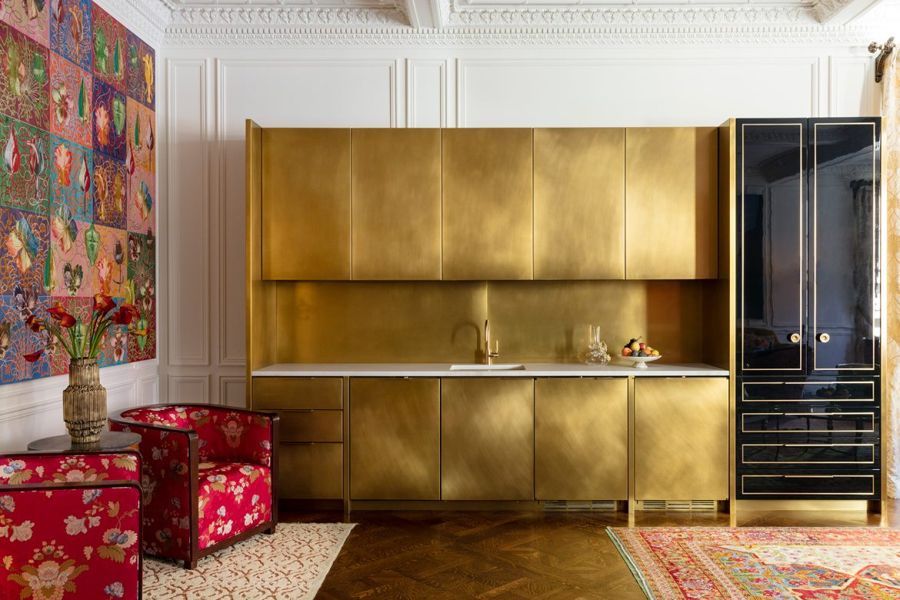
Cabinets pull double-duty in the kitchen; functionality is key, but style is equally important. As kitchens continue to open up into other living spaces, cabinet designs are delivering more distinctive style with a furniture feel.
“In 2026, cabinetry trends are focused on warmth, personalization and functionality,” says Nikki Davis, director of Sales Operations for Huntwood Custom Cabinets in Liberty Lake, WA. “Homeowners are moving toward kitchens that feel more natural and timeless, with an emphasis on warm wood tones, soft painted finishes and highly functional storage solutions.”
she adds. “Homeowners still want beautiful kitchens, but they also expect cabinetry to improve organization and support everyday living. Nobody wants a Pinterest-worthy kitchen that still can’t find a place for the air fryer.”
“Functionality remains central,” stresses Andreas Gommeringer, North American president for Häcker Kitchens in Miami, FL. “Today’s cabinetry must seamlessly integrate storage, appliances and organizational systems while maintaining a clean, cohesive appearance.
Technology that adds real value to the cabinetry is on the rise. “Technology in 2026 is less about gadgets and more about seamless integration and durability,” comments Shane Achey, director of marketing at Schaefferstown, PA-based Plain & Fancy Custom Cabinetry. “We are seeing a massive demand for functional ’hidden’ technology, such as pocket door systems that allow entire workstations or coffee bars to be tucked away completely out of sight when not in use.”
Simple door designs with refined details, warm tones, accents in greens and blues, and mixed materials for contrast are other top kitchen cabinet trends, according to manufacturers recently surveyed by Kitchen & Bath Design News.
Warm Connections
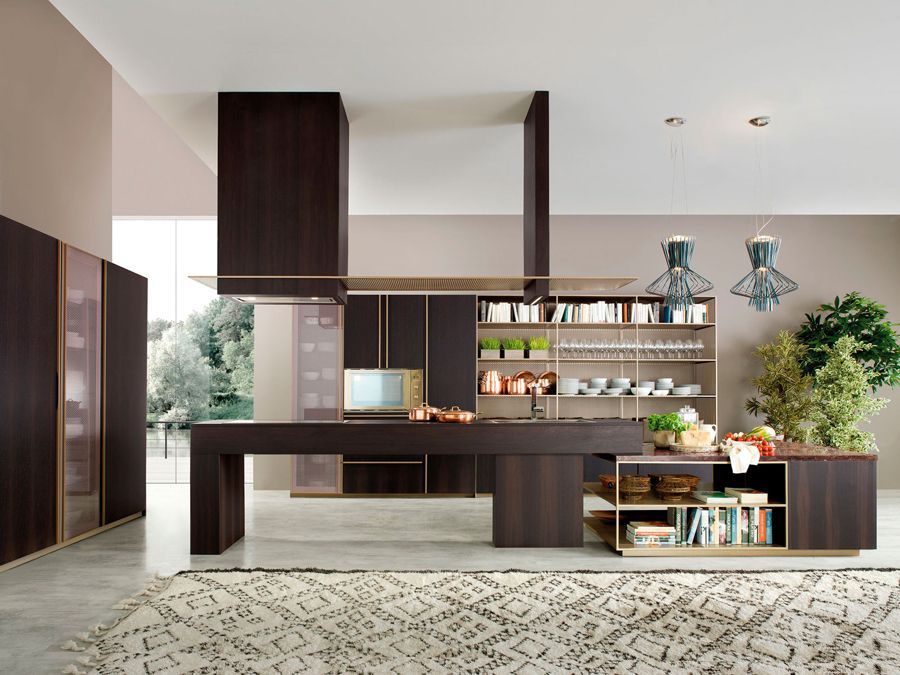
The kitchen has increasingly become open to the rest of the home, leading to demand for designs that exude warmth and connect the kitchen with the rest of the home.
“As the lines blur between the kitchen and other living spaces, cabinetry is shifting toward warmer, more architectural and tailored pieces that suit all areas of the home,” explains Rod Hunter, general manager at Wood-Mode Fine Custom Cabinetry in Kreamer, PA. “Kitchens are increasingly incorporating furniture-like elements, with features like panel-ready appliances and more millwork detail that blend the room with adjacent living spaces.”
“Radius and arched cabinets are becoming more popular, bringing a softer, custom look to kitchens, bathrooms and built-in spaces,” observes Trent Duong, senior product designer for Crystal Cabinet Works in Princeton MN. “Details like rounded island corners, bowfront cabinets and arched doors add character and give the space a furniture-inspired feel.”
“Kitchen cabinetry is increasingly being treated as an architectural element rather than a standalone component,” Gommeringer concurs.
“A key shift is the move toward warmth and authenticity. Natural wood tones, particularly lighter oaks and textured finishes, are replacing cooler palettes, reflecting a broader preference for tactile, human-centered design,” he adds.
“We’re seeing a strong revival of wood stains taking a more prominent role in interiors, bringing warmth, richness and depth back into spaces,” reports Kathryn Schroeder, director of marketing at WoodHarbor Custom Cabinetry in Mason City, IA.
“Warm neutrals are gaining traction as a softer alternative to crisp whites, bringing a more inviting feel to interiors,” she says. “At the same time, richer tones like moody greens, deep purples and terracotta are being introduced to add depth and a playful pop of color.”
“Natural wood finishes continue to gain traction, reflecting the broader shift toward warmer, nature-inspired interiors,” offers Jami Harmon, senior director of product management, cabinetry and closets for
NorthPoint Cabinetry in Bossier City, LA. “There’s a clear move away from stark white cabinetry and toward softer neutrals and organic tones that feel more grounded.”
Warmer whites are gaining momentum, he adds. “These softer shades offer a clean look with more depth, making them easier to layer into a space without feeling too stark or clinical.”
Accents, Layers and Contrast
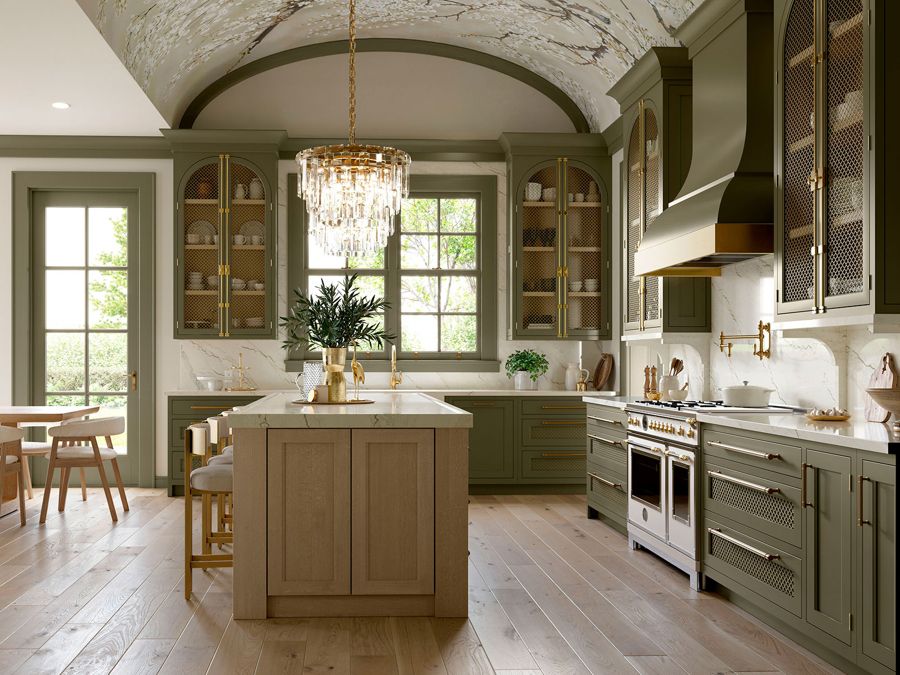
Omega Cabinetry, a custom cabinet brand of MasterBrand, Inc., recently expanded its portfolio to include 13 new door styles.
While warm and neutral tones are taking priority in cabinetry, manufacturers say that color accents, layering of tones and mixed materials for visual interest are also important.
Hunter says, “We are seeing a shift toward softened tones, such as vintage glazes on white cabinetry and dark-stained cabinets that still reveal the natural wood grain. Rather than stark contrasts, colors with layers and depth are taking center stage in what we call ’soft contrast’.” He adds, “For accents, blues and greens remain popular, but these hues have shifted to incorporate gray undertones for a more rich and muted palette.”
Duong reports that wood finishes are trending in two directions: light, natural tones used throughout the kitchen and dark espresso finishes used as accent elements for contrast. “Painted cabinetry is shifting from bright white toward light beige, while accent colors are moving more toward greens rather than blues, with both palettes leaning softer and more muted.”
“Two-tone kitchens also remain very popular, especially combinations that mix painted perimeter cabinetry with stained wood islands or accent areas,” Davis states. “Overall, homeowners are leaning toward colors that feel calming, natural and timeless rather than overly bright or stark.”
Schroeder reports, “Designers are also layering in a wider mix of materials to elevate spaces and make them feel more distinctive; elements like metal doors, wire inserts, leather accents and textured finishes are adding richness and creating memorable focal points.”
In color, blues and greens are on top, along with a range of neutrals. “Blues, greens and warm whites are leading the way,” stresses Mary Baber, design & training manager for Marsh Cabinets in High Point, NC. “Overall, there’s a move toward softer, warmer and more natural color palettes.”
“Outside of the white/neutral family, natural greens and blues are the most requested non-white shades,” agrees Achey. “These tones are being used to create focal points – typically on islands or specialized beverage centers – to add depth to the room without overwhelming the overall design.”
“Shades of greens and blues continue to show up as accent finishes on islands or base cabinetry,” Harmon concurs. “Designers are pairing these tones with wood finishes or warm neutrals to create contrast and dimension while keeping the overall palette balanced.”
Nancy Kitchen, design and order processing for Covered Bridge Cabinetry in East Hanover, NJ says that a neutral, natural color palette is emerging, with warm wood tones, stone accents and touches of natural colors like deep purples, burgundy, sage greens and buttery yellow.
Simple Style
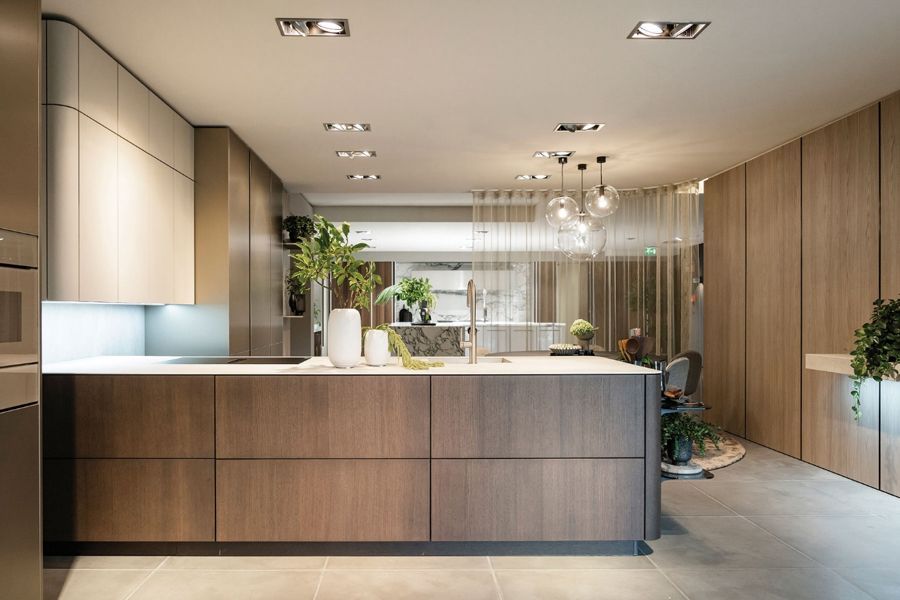
Along with warmth and depth, cabinetry that is simple in design is a top trend, manufacturers say. This means high interest in both Shaker and slab-style doors, but with some variations. Subtle accents and detailing are being added for texture and visual interest.
“Transitional design continues to dominate on a broader scale, but there’s still strong demand for very narrow-framed doors, reflecting a preference for cleaner sightlines and a more refined, streamlined look,” says Schroeder.
“Simple door styles, especially Shaker-inspired profiles, remain dominant because they work across a wide range of design aesthetics and finishes,” Harmon points out.
“Door styles are trending toward simplified, transitional designs,” Jon Dahl, v.p. of sales & marketing at QCCI in New Holland, PA, adds. “The slim Shaker, which we call Edge Series, remains very popular, along with flat-panel options that offer a more contemporary look while still feeling timeless.”
Davis agrees. “Slim Shaker styles continue to be one of the strongest trends because they work well in both modern and transitional homes,” she says.
“Shaker is still popular – but not the standard Shaker,” expresses Kitchen. Mini Shaker, along with Shaker styles with varied architectural detailing, are gaining traction in the mainstream populace, she says. “Transitional and traditional style high-end cabinetry leans towards the raised panel feel – but with untraditional accents, rails with beads and beveled interior edges. Modern/contemporary [designs] are favoring slab doors with horizontal or vertical wood grains.”
Shaker styles with a range of stile and rail widths – whether thick, thin or micro – are the primary choice, Rugg agrees. “Profiles with slight detailing contribute to increased demand for texture and reflection of individual style,” he adds.
Duong reports, “Shakers are still the champ, but we are seeing a variety of modern updates to them. Newer versions of narrow Shakers and micro Shakers help bridge the gap between Shaker and slab styling, which is also at the top of the door trends.”
According to Gommeringer, cabinet fronts still favor clean lines and minimal profiles, with slab fronts remaining a dominant selection. “However, there is a growing emphasis on surface detail with subtle wood graining, fluted textures and ultra-matte finishes that introduce softness and dimension to otherwise streamlined designs,” he says. “Handle-less systems are also on the rise. We’re seeing integrated channel handles widely specified, reinforcing a seamless, architectural look.”
“Rift-cut white oak is still the premier species for today’s spaces, but we are seeing it paired with more intricate details,” offers Achey. “Reeded doors continue to show incredible staying power. We are also seeing a rise in ’Modern-Traditional’ hybrids – specifically modernizing inset styles with a square bead or metal inset.”
Strategic Openings
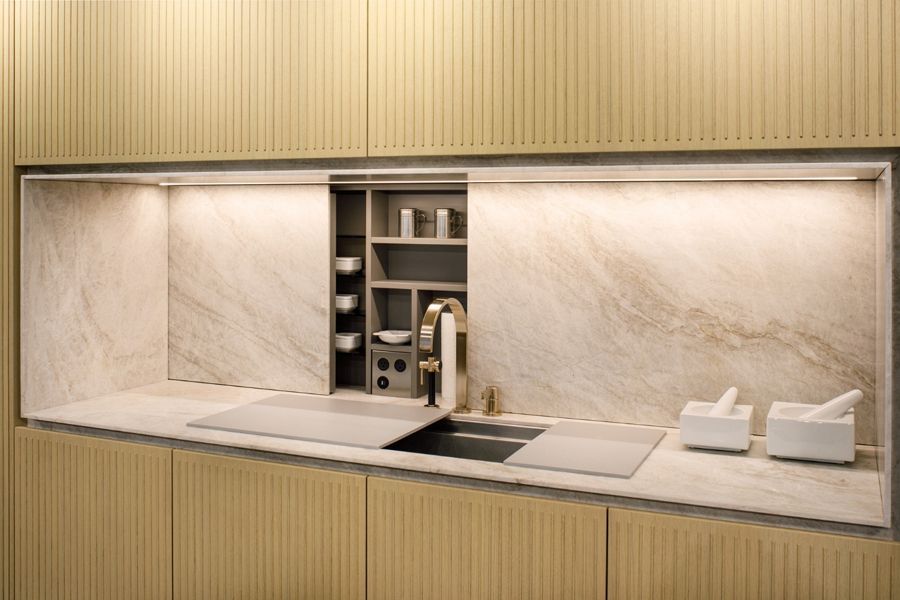
Designs still include some open storage, but manufacturers say there’s a move towards a mixture of various door types to add contrast to the space. Open shelving is used more intentionally and sparingly.
“As cabinetry becomes more furniture-inspired, we’re seeing an increased use of metal and glass inserts in upper cabinets,” states Hunter. “These elements introduce depth and contrast with materials like wire mesh, decorative metal or textured glass while still providing a layer of concealment.”
Duong adds, “We are seeing trends evolve into a hybrid approach of glass doors or metal mesh doors in place of the open shelving that was peaking a few years ago. Additionally, the use of [a] hidden walk-through pantry shifts the open cabinetry into other dedicated spaces to keep the kitchen uncluttered.”
“Open cabinetry is still present, but it’s being used much more strategically and sparingly,” Dahl adds. “Instead of entire walls of open shelving, designers are incorporating small moments of openness – such as a few floating shelves or a niche – primarily for display or easy access. Overall, the preference is shifting back toward concealed storage to reduce visual clutter.”
Achey agrees. “Regarding open cabinetry, the trend has shifted from ’total exposure’ to ’curated openness,’” he says. “Instead of standard open shelving, designers are utilizing glass-front ’jewelry box’ cabinets and metal-framed inserts. This allows homeowners to showcase decorative items and textures while maintaining a clean, enclosed aesthetic.”
“Open cabinetry is still being used, but more selectively. Floating shelves are becoming more common, and open areas are typically used for display and styling rather than primary storage,” offers Baber.
Davis agrees that open shelving is used more intentionally than in previous years. “Most homeowners still prefer the functionality of closed cabinetry, so open elements are typically limited to decorative areas like coffee stations, display shelves or glass-front cabinets that help break up large cabinet runs without sacrificing storage,” she remarks.
Integration, Durability and Function
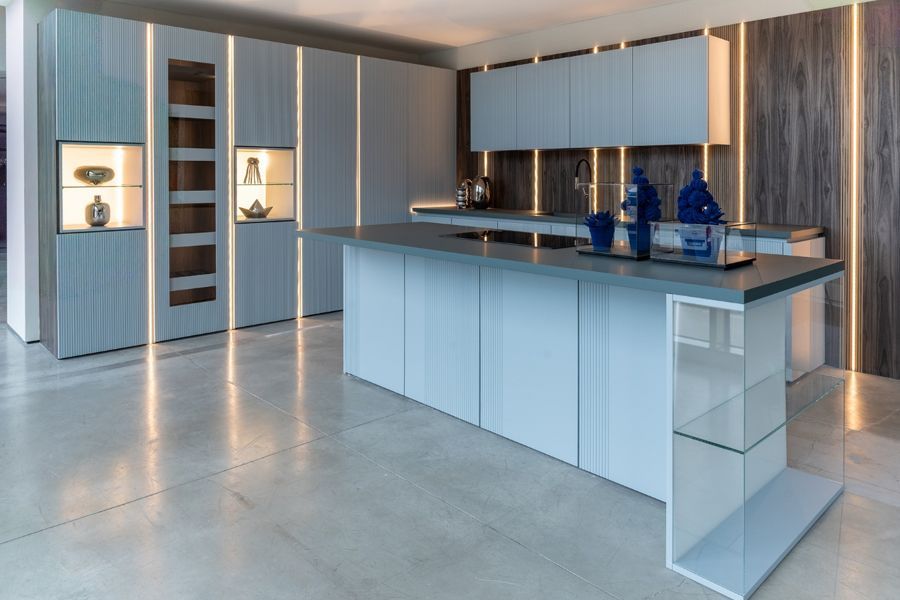
Advances in technology that make cabinets more functional, durable and better integrated into the kitchen are important, manufacturers say. Storage solutions, lighting, materials and hinge technologies are all rising in importance.
“Technology is reshaping what homeowners expect from their cabinetry,” Harmon observes. “Features that once felt like upgrades are now standard, with soft-close doors and drawers leading the way. They create a quieter, more refined experience and have become an expectation rather than an add-on.”
“The best advances make the kitchen more functional and seamless,” notes Hunter. “Many homeowners don’t realize the full potential of cabinetry until they experience features like integrated lighting, customized storage or even embedded wireless charging. Today, cabinetry is all about quiet technology, where game-changing advances make storage intuitive and the overall kitchen experience more effortless.”
Davis states that today’s homeowners expect more customization in their cabinetry than ever before. “Advances in manufacturing and design allow cabinetry to be more personalized, whether that means specialized storage solutions, integrated appliances, custom sizing or finish combinations tailored to the way people actually live. The modern kitchen is expected to work harder for everyday life, and cabinetry plays a major role in making those spaces more efficient and organized,” she observes.
“Technology is enabling both better functionality and cleaner design,” states Dahl. “On the functional side, there’s a growing expectation for highly organized interiors – pull-outs, drawer systems and storage solutions that maximize every inch.”
Rugg adds that tech advancements tend to be subtle and concealed. “Mechanical innovation in hinge, glide and lift systems lend to cleaner looks and provide once untapped flexibility in cabinet utility,” he says. “Broad availability and an array of storage systems have provided access to nearly any solution a homeowner desires while remaining on budget.”
Harmon agrees that storage is also evolving. “Homeowners are prioritizing function, with pullout organizers, integrated waste solutions and customized drawer inserts becoming more common. Details like built-in power within drawers or organizers are also gaining attention for the added convenience they bring to everyday routines,” he remarks.
Lighting is another area where advancements in the available technology make a difference. “Tunable-white LED options allow users to shift color temperature throughout the day, improving both task visibility and overall ambiance,” Harmon adds. “For designers, these advancements make it easier to deliver kitchens that not only look good but perform well day to day.”
Duong reports, “LED ribbons are becoming smaller and easier to install, and tunable lighting can now be adjusted to match the home or a preset scene all controlled from a smartphone or tablet. It’s easier than ever to use lighting technology to accent, create a focal point or enhance functional areas of cabinetry.”
Advancements in material manufacturing provide more durable, uniform options, manufacturers say. “Improvements in finishing processes are delivering more durable, low-maintenance surfaces, helping cabinetry maintain its appearance over time even with heavy daily use,” Dahl reports.
Achey adds, “Advances in material science have changed the game for wood finishes. Engineered veneers are allowing us to provide designers with a level of grain consistency and durability that was previously difficult to achieve with traditional flitch-matching. This technology allows for a perfectly uniform, modern look across large-scale installations, ensuring the final product is as resilient as it is aesthetic.”
Article written by Elizabeth Richards