
Quartz vs. Quartzite Countertops by Cambria
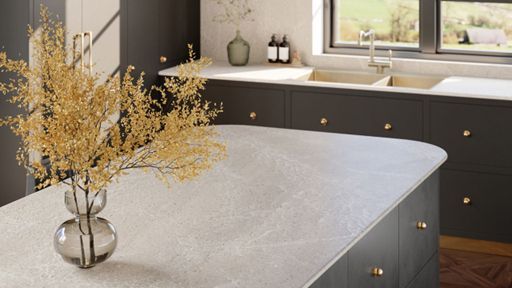
Quartz and quartzite countertops are both stunning choices for your home. While quartzite’s natural variations create a one-of-a-kind aesthetic, quartz provides consistent patterns and a wider range of colors and styles. Both are extremely durable, while quartz is maintenance free due to its nonporous surface. Explore the unique characteristics of each when looking for the perfect fit for your space.
Choosing between quartz and quartzite countertops? We’re here to help you find the right fit for your home.
What Is Quartz?
Quartz countertops are made of natural quartz crystals combined with binders and pigments to create the final product. This process enables quartz countertops to be extremely durable, nonabsorbent, and resistant to stains, scratches, and chips. Available in a wide range of designs, colors, and finishes, Cambria quartz surfaces also offer rich depth, texture, and versatile edge profiles for a truly luxurious look.
What Is Quartzite?
Quartzite begins as a natural sandstone transformed by intense heat and pressure over time. This metamorphic process creates a durable stone with unique veining patterns, often resembling the look of marble. Blocks are then quarried, cut, shaped, and polished into slabs for use in design. Quartzite’s natural appearance and distinctiveness lend a timeless quality to interior spaces. However, due to its porous nature, it requires regular sealing to prevent staining and etching.
Performance: Quartz vs. Quartzite
Both quartz and quartzite offer exceptional durability and lasting beauty. Discover the differences between how the two perform.
Maintenance
Quartz and quartzite countertops have different maintenance needs due to their distinct compositions. Cambria quartz surfaces, being nonporous, are stain resistant, never need sealing, and are NSF-51 certified for safe food preparation. Simply wipe with warm water, a soft cotton cloth, and mild soap, if desired. To maintain its beauty, quartzite’s porous surface requires regular sealing and immediate cleanup of spills to prevent staining.
Durability
Both quartz and quartzite are highly durable, known for their resistance to scratches and chips. This strength makes them excellent choices for high-traffic areas like kitchens. While quartzite is more heat resistant than quartz, we recommend using a closed-weave hot pad or solid trivet to protect either surface. Cambria quartz surfaces are backed by a transferable Full Lifetime Warranty to ensure peace of mind for a lifetime.
Appearance
Quartzite countertops feature unique veining patterns, but their limited color options can restrict their use in different room aesthetics. Furthermore, the natural variation from slab to slab can make it challenging to match pieces within the same installation or space. Quartz countertops, on the other hand, offer a wide palette of consistent colors and patterns from slab to slab, ensuring a uniform look throughout your space. Due to its versatile nature across various styles and colors, quartz is a popular choice, with Cambria setting the standard for design innovation.
Environmental Impact
Quartz is harvested by removing small aggregate quartz stones, which leaves a smaller footprint and generates less waste. This harvesting practice allows for more optimal native vegetation restoration. Quartzite is quarried from the earth in large blocks and then cut into slabs, making it resource-intensive. The durability of both quartz and quartzite reduces the need for frequent replacement, making them environmentally favorable choices.