
Shower Trends Embrace Wellness and Warmth
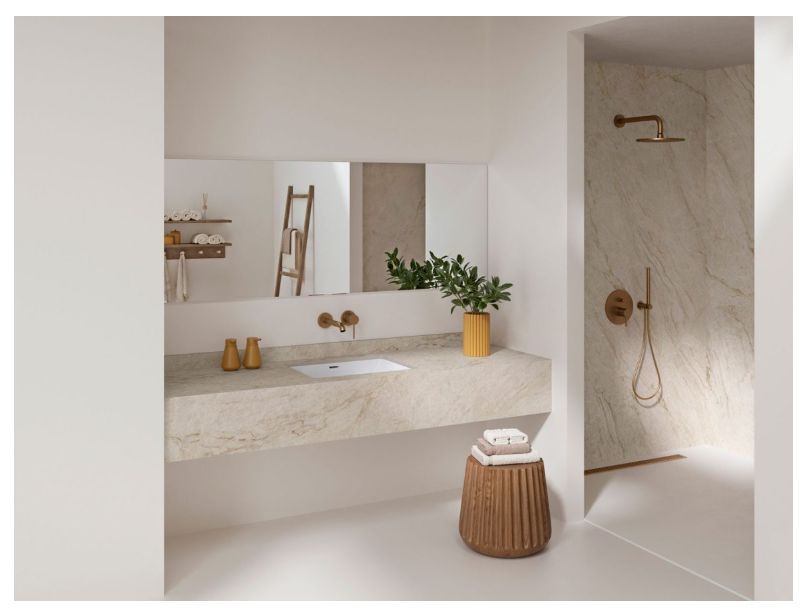
In the shower, trends center around creating warm, relaxing spa-like environments filled with features that reflect individual lifestyles.
A warm atmosphere with elements that promote relaxation and wellness are top considerations in designing the shower space, as homeowners continue to demand customized luxury features to create a personal refuge in their bathroom suites.
“We’re seeing a strong shift toward designing showers as immersive wellness environments that feel natural, calming and intuitive to use. Homeowners want spaces that connect them back to an organic, restorative experience, drawing inspiration from nature through materials, light and water without feeling overly complex or intimidating,” reports Nichole Flaws, director of marketing for ThermaSol, based in Round Rock, TX, and Harvia USA, based in Lewisburg, WV. “This has led to a rise in spa-inspired showers that integrate steam, water, light and sound into a seamless, daily ritual. The emphasis is on creating an elevated experience that feels effortless and welcoming.”
Customization is also important; homeowners want their showers to reflect their personality and style, both aesthetically and through the features they select. “Consumers are looking for showers that do more than simply get them clean,” explains Josh Feldman, senior director product marketing at Indianapolis, IN-basedDelta Faucet Company. “We’re seeing growing demand for solutions that make the daily routine more personalized, whether that’s adjustable spray experiences, shower systems that accommodate different heights and preferences, or products that support healthier skin and hair. Homeowners want upgrades that improve comfort, convenience and overall well-being without requiring a major bathroom renovation.”
“Homeowners are dedicating more attention and, where available, more space, to the shower, creating opportunities for elevated functionality and personalization,” states Bridget Volz, category manager – Brizo Bath, Kitchen and Showering, at Brizo in Indianapolis, IN. “As these spaces grow, scale and proportion become essential: a mix of component sizes, from large statement showerheads and hand showers to body sprays and specialty outlets, all balanced against the overall design intent.”
Other top trends in the shower include a move towards warm finishes and natural materials, textured looks and technology that enhances the function and personalization of the space. That’s according to manufacturers recently surveyed by Kitchen & Bath Design News.
Customized Wellness
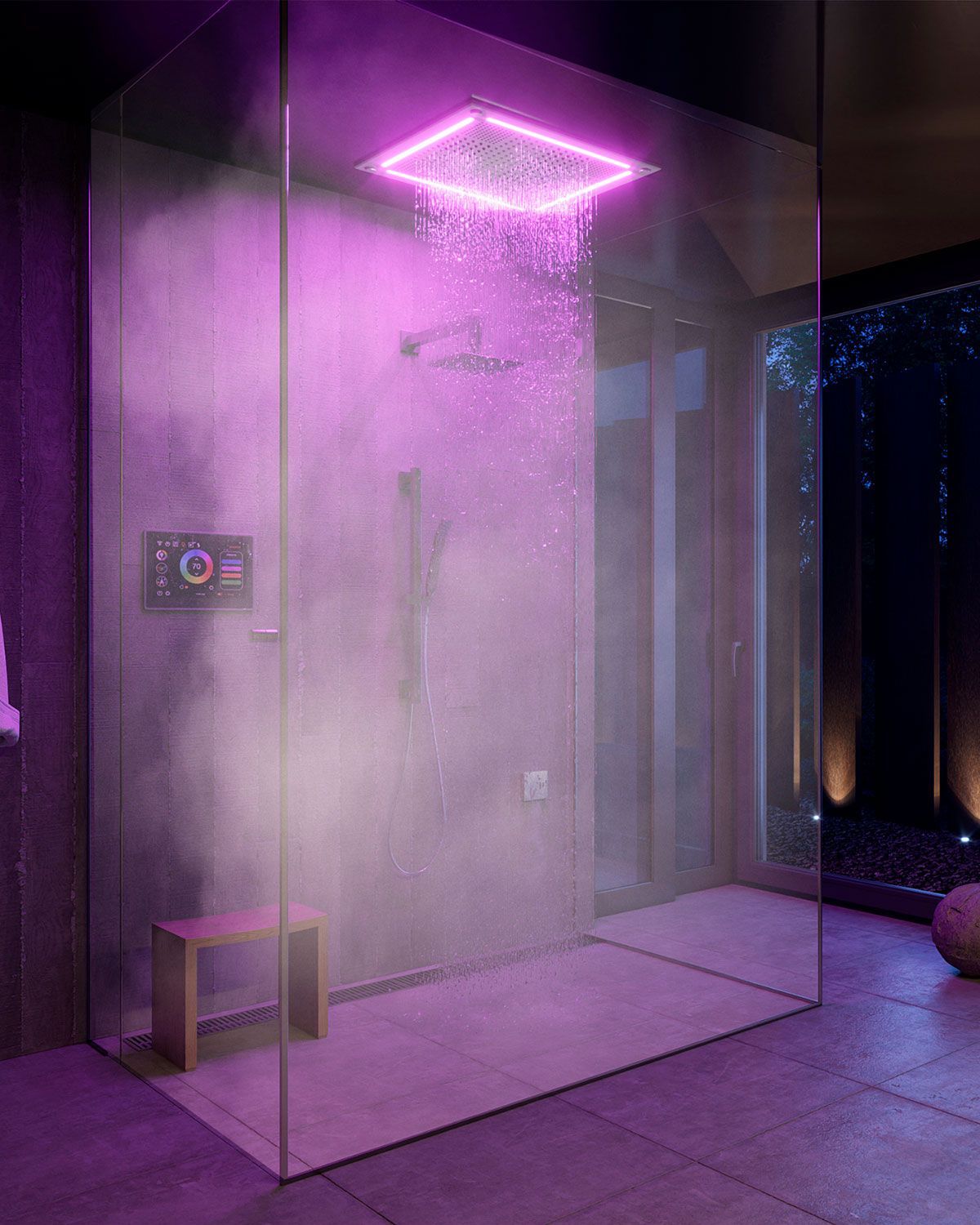
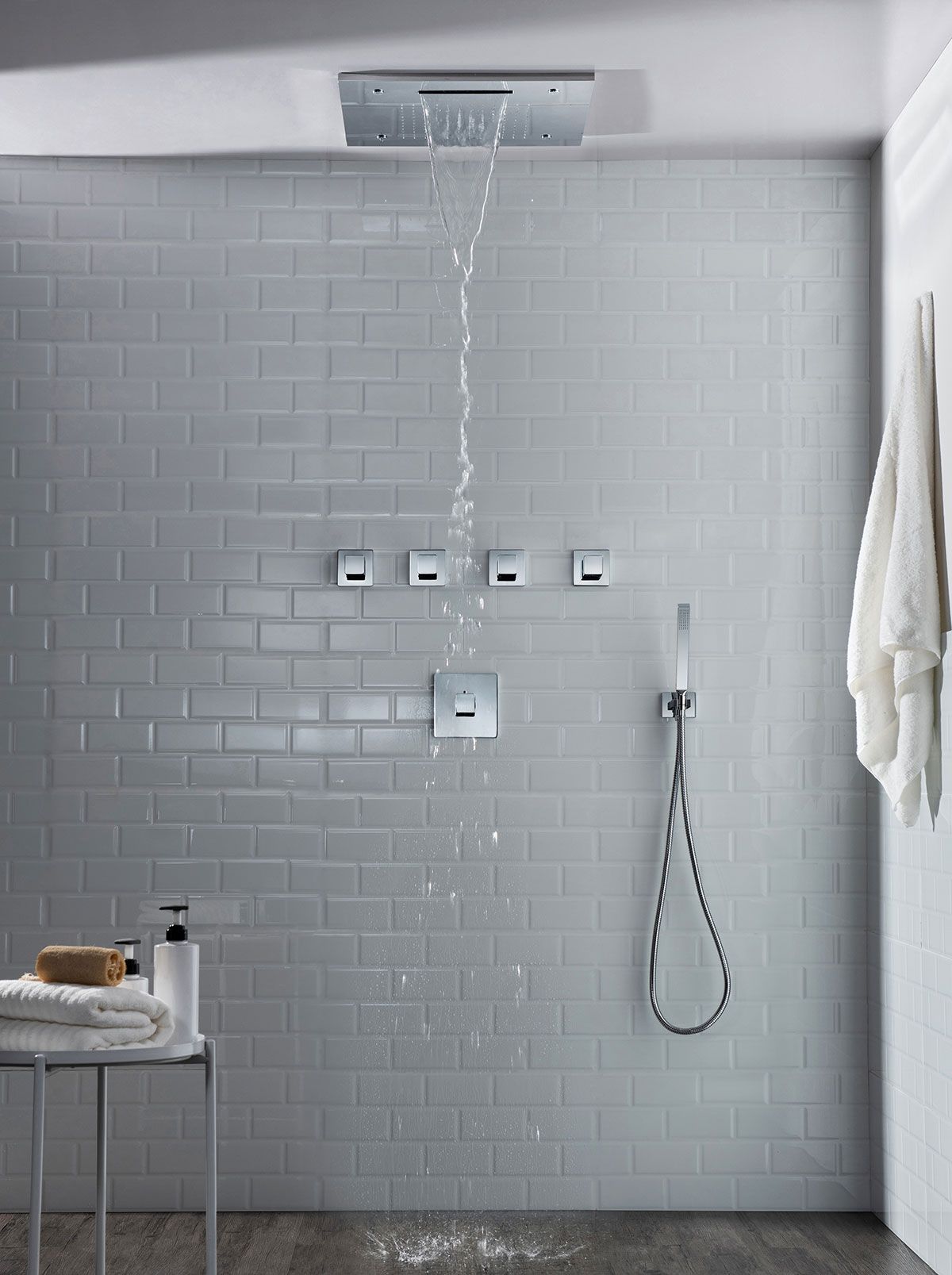
ThermaSol’s HydroVive rainhead (left) offers chromatherapy, mood lighting and guided meditation. The Flusso Kitchen & Bath Cascade Rainhead (right) has three spray experiences: rainfall, waterfall and mist flow.
Embracing a home spa environment, particularly through shower features, is an ongoing trend that is only getting stronger. Consumers want a space that focuses on overall wellness and allows them to relax and let go of everyday stressors.
“The biggest trend is the transformation of the shower into a ‘home spa’ wellness retreat, featuring integrated steam systems and built-in seating,” comments Abbas Poonawala, CEO at Dallas, TX-based Flusso Kitchen & Bath Company.
“We’re seeing designers and homeowners place much greater emphasis on creating a spa-like experience at home,” concurs Jem Bigland, president of Barber Wilsons, based in London, United Kingdom. “Customization and wellness have also become a major driver, with showers increasingly viewed as spaces for relaxation rather than simply functionality.”
“We’re seeing clients incorporate elements that create a sense of relaxation and retreat, rather than viewing the shower as simply a functional space,” agrees Stephanie Oh Haley, director of product and marketing at Watermark Designs in Brooklyn, NY. “The wellness movement is influencing what clients are requesting. People want showers that feel restorative and elevated, but they’re also asking for products that are built to last and environmentally responsible.”
The desire for customization and luxury extends to the outdoors as well. “Exterior shower installations are becoming more elaborate, complete with a suite of matching accessories to create a more luxurious bathing experience,” offers Erik Ambjor, president of Sonoma Forge, based in Petaluma, CA.
Open, Organic Warmth
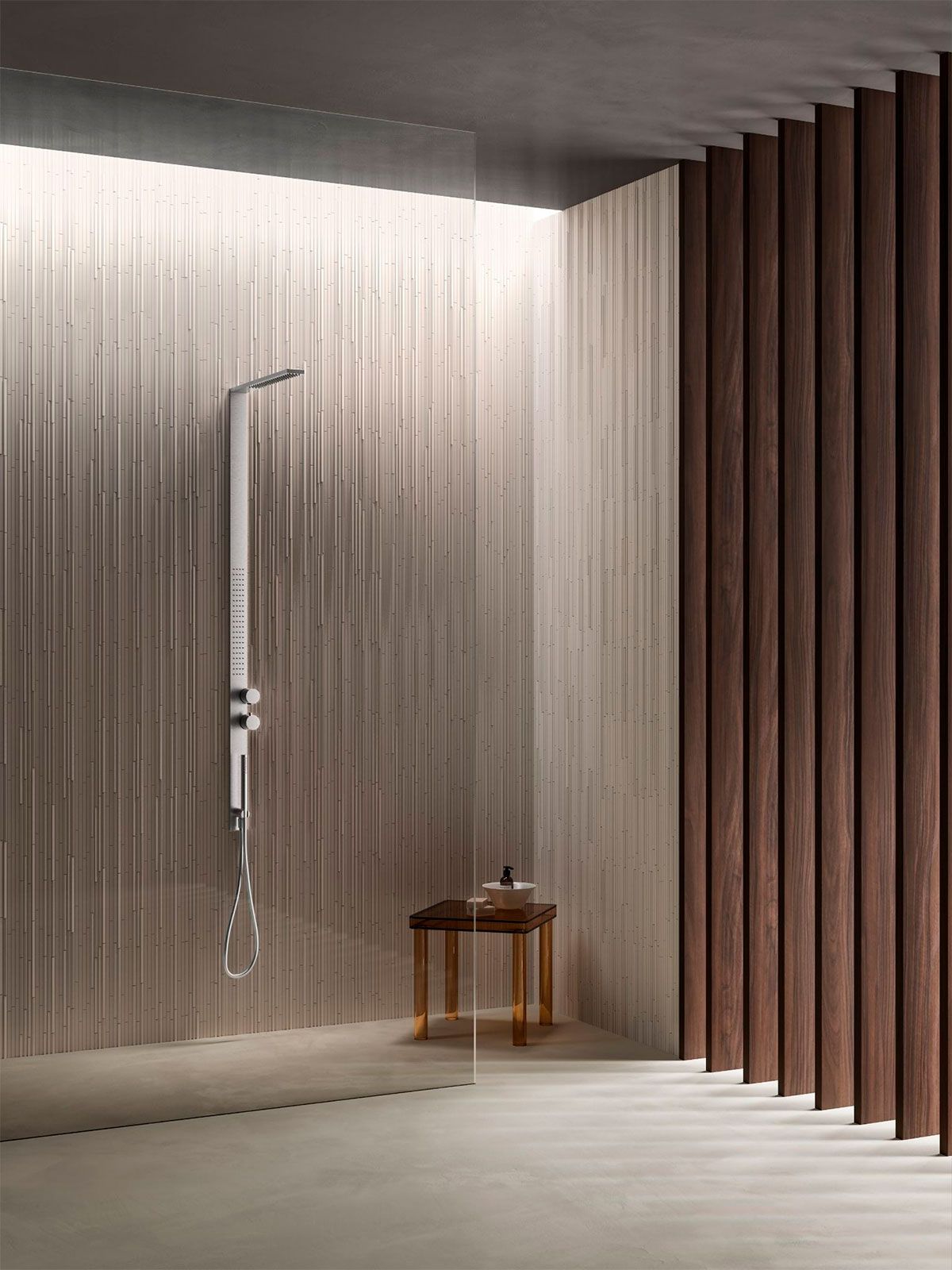
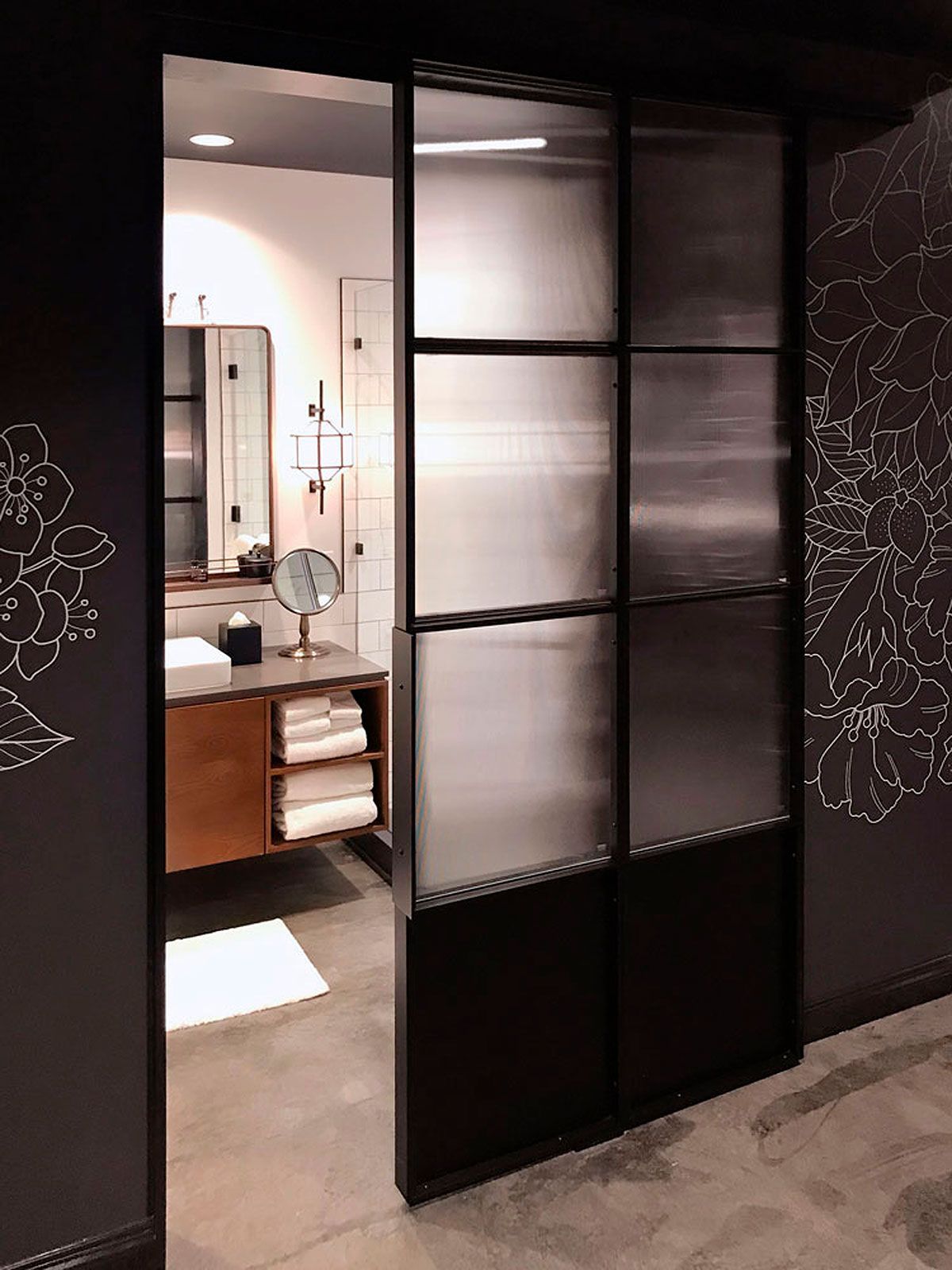
Fantini reimagines the shower as a sensory experience with MilanoSlim (left) designed by Franco Sargiani. Bendheim’s low-iron Houdini textured glass (right) provides visual privacy while preserving natural light.
Showers are becoming more open, featuring natural colors and materials that exude softness, warmth and comfort.
“Visually, the market is dominating with open-concept, curbless walk-in layouts, biophilic designs that maximize natural light and softer architectural geometry like arched entryways,” stresses Poonawala.
“Larger walk-in and curbless showers provide room for benches, multiple water sources and greater freedom of movement while creating a more open architectural presence within the bathroom suite,” adds Ambjor.
Oh Haley reports they’re still seeing a lot of natural stone, particularly marble and onyx, in the shower space. “These materials have enduring appeal because they’re timeless and every slab is unique,” she observes. “At the same time, it’s been exciting to see designers experiment with materials like concrete, tadelakt, ceramic tile and even glass block. We’re also seeing more thoughtful layering of colors, textures and material palettes, creating spaces that feel both highly personalized and timeless.”
Texture is increasingly important in the space, remarks Steven Jayson, co-owner and v.p. of business development at Bendheim, in Wayne, NJ. “Designers are incorporating textured and decorative architectural glass to add depth, soften light and create a greater sense of privacy without making the space feel smaller,” he says. “Reeded, fluted, ribbed and other architectural glass patterns continue to gain popularity. Rather than relying on bold colors, designers are layering materials with subtle texture and tonal variation to create timeless spaces that feel warm and sophisticated.”
Poonawala agrees. “Warm neutrals, [like] greige and cream, and earthy greens or teals have replaced clinical grays,” he observes. “Tactile, ribbed or fluted tile textures and vertically stacked patterns are highly favored over traditional subway tile.”
Volz adds, “For shower walls and enclosures, the preference is elevated, architectural design – large-format surfaces, natural stone looks and curated textured materials that transform the shower into a statement space within the bath.”
“Homeowners continue to gravitate toward warm, tactile finishes that complement natural materials. Brushed brass, brushed nickel and softer metallic finishes remain especially popular because they bring warmth while maintaining a timeless appeal,” says Feldman.
Flaws agrees. “There’s a clear movement toward warmer finishes like brushed brass and tempered bronze, often paired with organic materials such as stone, wood tones and textured tile.”
“Matte black and warm metallic finishes continue to be popular, particularly those with unique textures and a tactile feel,” explains Diego Zanatta, business development director at Fantini North AMerica, based in New York, NY. “At the same time, warmer, more transitional finishes such as unlacquered brass, bronze and deep chocolate tones are gaining momentum.”
Ambjor adds that, in exterior showers, they’ve seen a growing demand for “living” copper and brass finishes. “Rather than expecting an outdoor fixture to remain visually unchanged, luxury homeowners and designers are increasingly embracing this natural evolution as part of the design. Each installation becomes more individualized over time and feels increasingly connected to its landscape,” he says. “This preference reflects a broader movement toward warm, authentic materials with texture, depth and a sense of permanence. Copper, bronze and aged-brass tones pair especially well with the natural stone, wood, concrete and lush landscaping frequently used in upscale outdoor bathing spaces.”
Ample Space
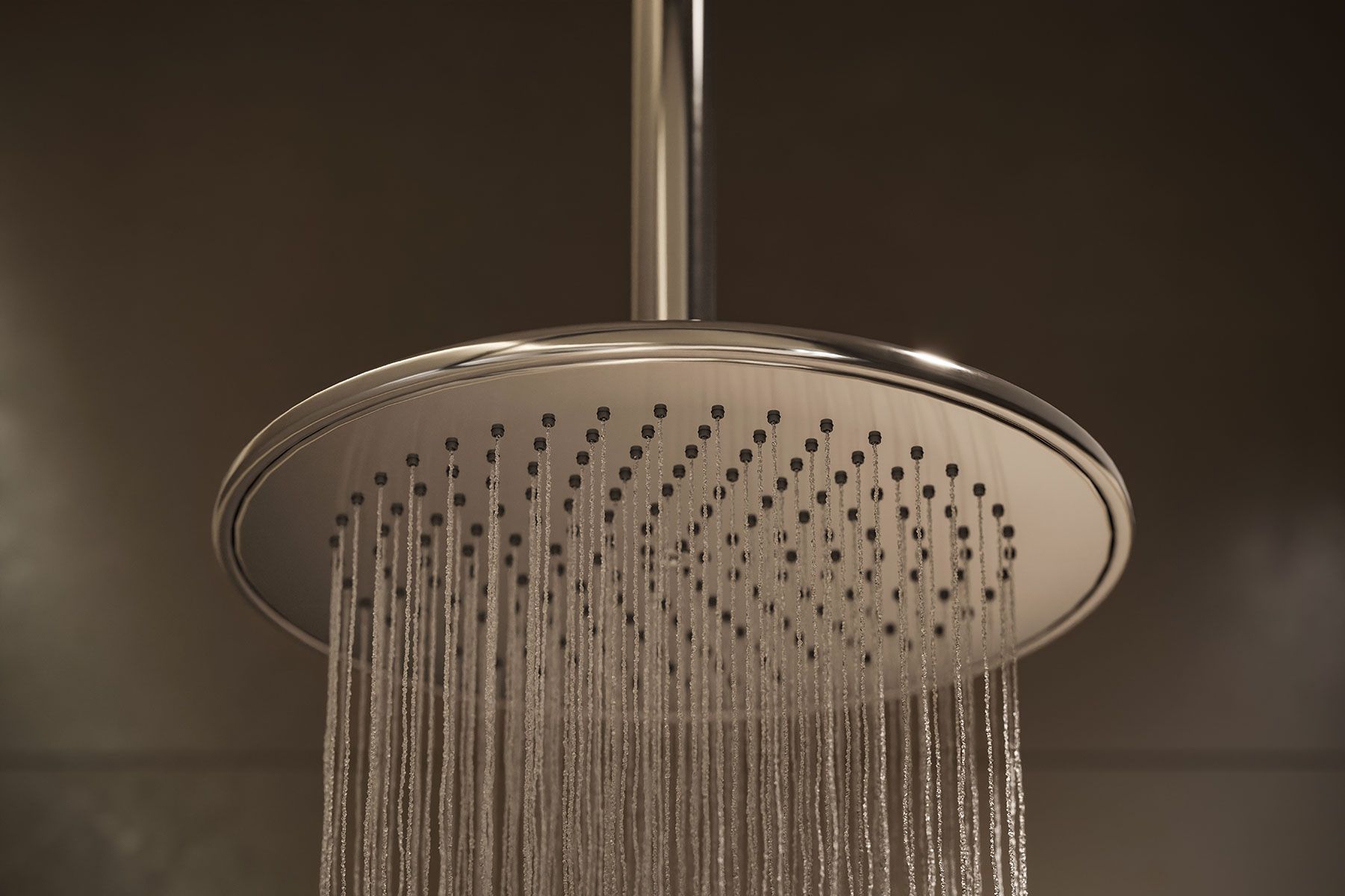
Newport Brass’ Thin Showerhead Collection features a suite of shower fixtures including an expansive 11.5″ spray face that delivers a rainfall experience.
While shower size is influenced by the available space, many manufacturers say that larger showering areas with larger showerheads are a priority.
“Shower spaces are continuing to grow, with larger, open layouts that allow for a more immersive and flexible experience,” states Flaws. “These expanded footprints make room for multiple water outlets, dedicated zones and a more architectural approach to design.”
Homeowners are often forgoing a separate tub area to focus on the shower. “Larger showering spaces remain in demand, especially as many homeowners choose to prioritize an expansive shower over a separate bathtub in the primary suite,” remarks Bigland. “Oversized walk-in showers provide greater accessibility, flexibility and a sense of luxury.”
Poonawala agrees that homeowners are routinely trading traditional bathtubs for oversized shower footprints. “Design is also moving vertically, utilizing floor-to-ceiling glass enclosures and massive, large-format porcelain slabs to create a grand scale with minimal grout lines.”
The components of the shower are often larger, particularly in primary bathrooms, according to manufacturers. These components are key to creating the spa-like environment homeowners desire.
“We are seeing shower areas become more generous in scale, particularly in luxury primary bathrooms where the shower is increasingly designed as a spacious, spa-like environment,” Ambjor reports. “Within these expanded spaces, larger-format rain heads continue to gain popularity,” he adds. “Their broader water coverage enhances the bathing experience, while their increased scale gives them the visual presence needed to feel properly proportioned to the shower.”
Zanatta agrees that oversized and multifunction showerheads are gaining momentum in primary bathrooms. “Larger, spa-like showers and walk-in wet rooms are becoming increasingly popular, often replacing the traditional enclosed shower to create a more luxurious experience,” he adds.
“Floor-to-ceiling glass enclosures, minimal hardware and barrier-free entries help create a seamless appearance that makes bathrooms feel brighter and more spacious,” offers Jayson.
Oh Haley believes size is driven by the home and how the space is being used. “In New York City, even in large apartments and townhouses, bathrooms are often more compact than those in beach, rural or suburban homes,” she explains. “In those larger residences, we’re seeing expansive primary bathrooms with features like double showers, dedicated steam showers and even separate sauna rooms. Ultimately, the design should respond to the architecture and the client’s lifestyle rather than follow a specific size trend.”
Technological Enhancements
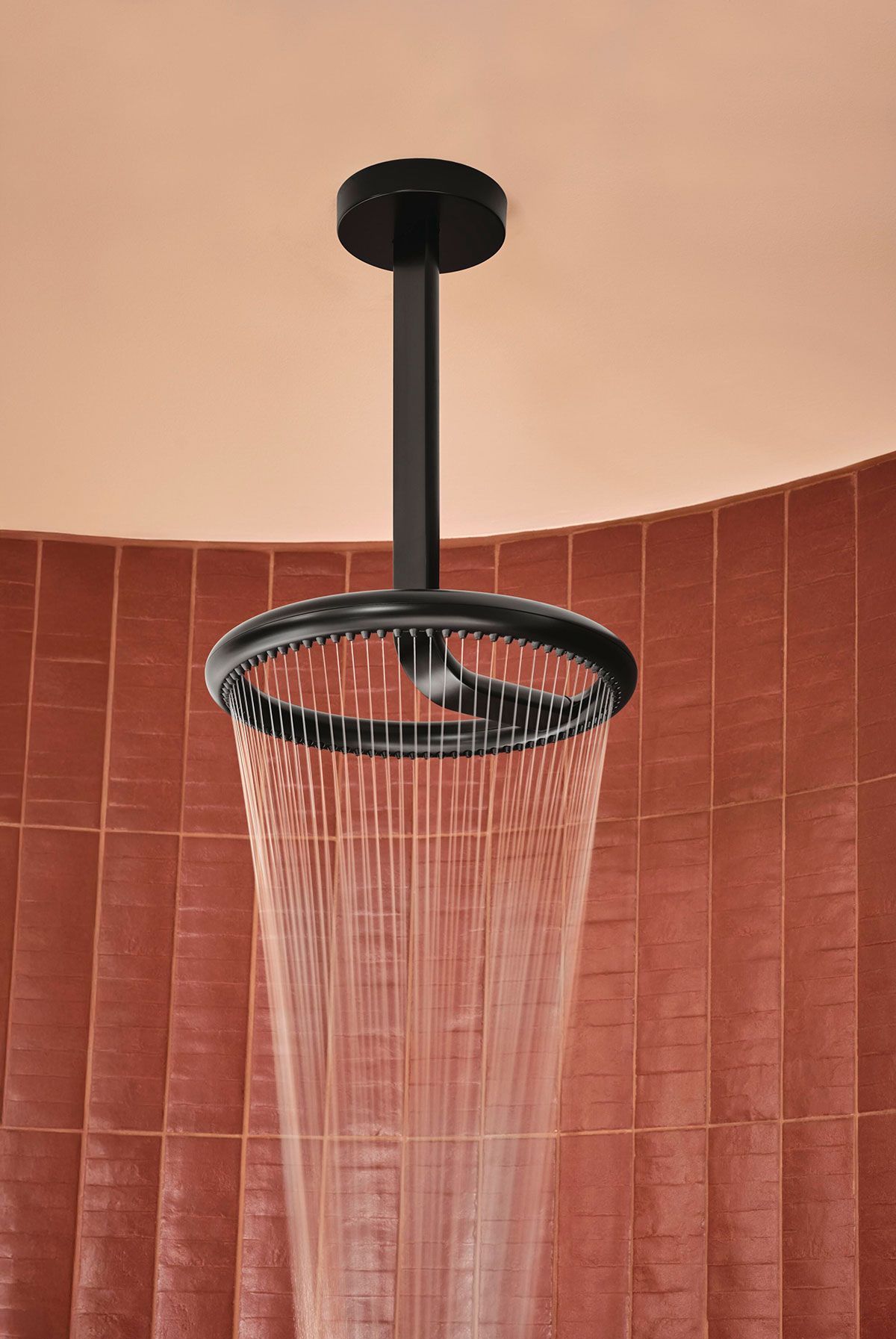
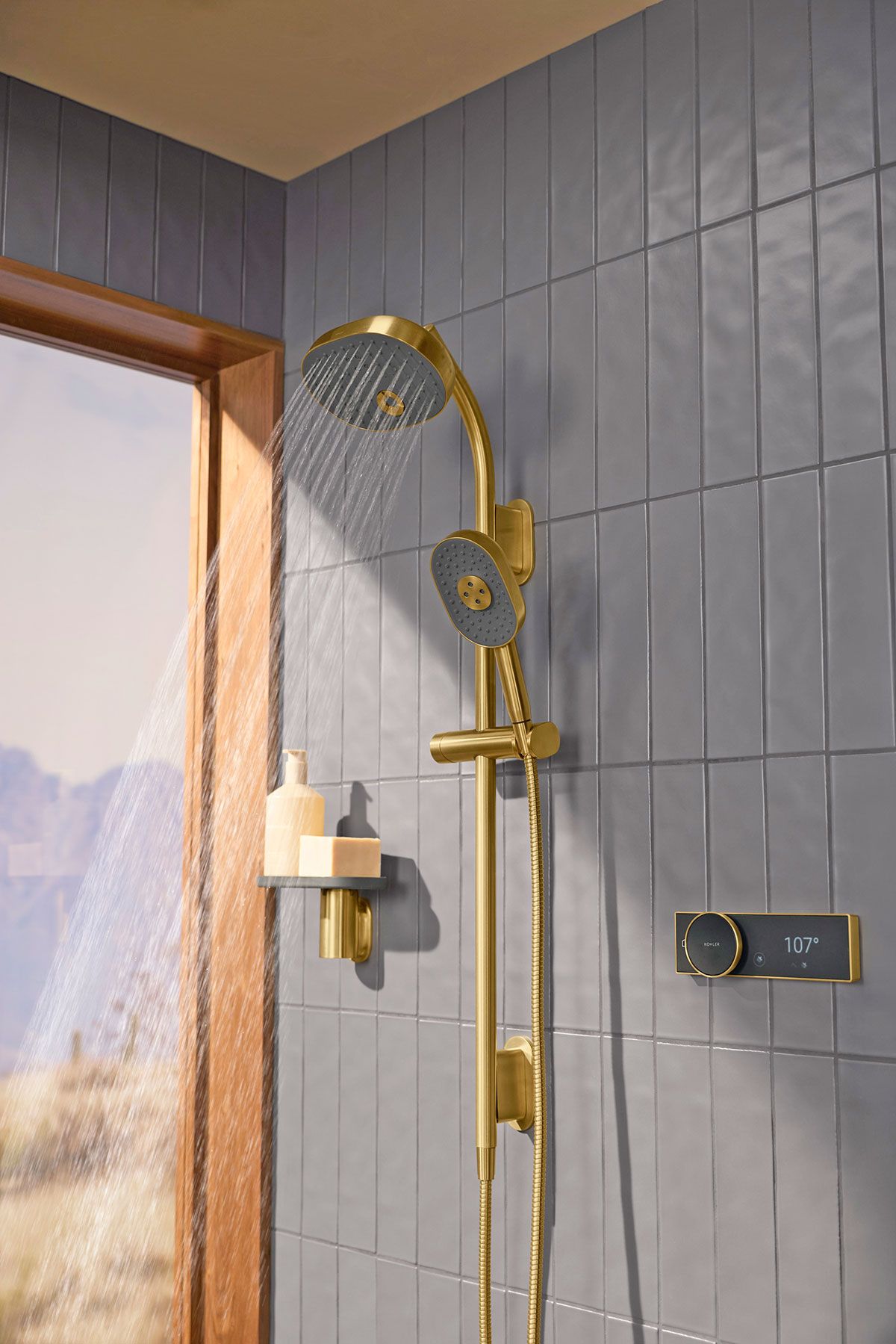
The Roccesco Bath Collection from Brizo (left) includes options like full spray and H2Okinetic technology with WaterSense labeled 1.75 gpm. The KOHLER Anthem EvoCycle hybrid smart shower system (right) is designed to reduce water usage by up to 80% when in Cycle mode.
Many manufacturers report that the demand for digital controls and smart technology that align with what consumers experience elsewhere in the home is high.
“Smart automation allows users to preheat water and set precise temperatures via app or voice control,” explains Poonawala. “Technology is also becoming invisible with flush-mount fixtures, while smart, eco-conscious valves track water consumption, and automated ventilation sensors adjust airflow based on real-time humidity.”
“Digital activation is quickly becoming table stakes,” says Clinton Cardinal, director, product marketing, digital showering for Brizo. “People expect the same control in their shower that they already have with their connected door locks and thermostats.” Digital showering also enables aging in place, he adds.
Advances in technology have also expanded what is possible in the shower space. Cardinal offers, “Experiences once limited to commercial spas – like steam, light and aroma therapies, warm-up modes and personalized presets – are now available at home.”
“Water-saving innovations are both a code requirement and a consumer expectation, pushing manufacturers to develop increasingly sophisticated solutions that preserve both performance and design,” indicates Zanatta. “At the same time, integrated technologies such as chromatherapy lighting, digital controls and smart-home connectivity are becoming increasingly common.”
“Technology is expanding what’s possible in shower design, particularly through greater material customization and performance,” says Jayson. “Today’s glass manufacturing techniques allow designers to create highly customized enclosures that combine beauty with durability. Advances in ceramic ink printing, for example, allow high-resolution patterns, gradients, textures and custom imagery to be permanently fused into the surface of architectural glass through a high-temperature firing process. Unlike films or applied coatings, these graphics become part of the glass itself, ensuring exceptional durability in wet, high-use environments.”
Whatever the technology, manufacturers say it must add meaningful benefits to the showering experience. Feldman reports, “Technology is expanding what consumers expect from the shower experience. While interest in digital showering continues to grow – with personalized settings, precise temperature control and greater customization – not every homeowner is looking for a major renovation. We’re also seeing demand for accessible innovations that deliver meaningful everyday benefits, such as water filtration that may help support healthier skin and hair, or shower features that make cleaning easier. Consumers want solutions that fit their lifestyle, budget and existing space while making their daily routine better.”
“Technology is becoming more sophisticated while remaining discreet. Shower systems that improve water efficiency without sacrificing performance are in high demand,” asserts Bigland. “At the same time, the most successful luxury bathrooms balance innovation with enduring craftsmanship. While technology enhances convenience and personalization, customers still value beautifully engineered brassware that offers longevity, reliability and timeless design.”
Ambjor notes that their customers are becoming more selective about the technology they choose. “Rather than app-based operation, electronic interfaces or extensively programmable controls, we are seeing a preference for systems that are intuitive, tactile and easy to operate.” A notable exception, he adds, is thermostatic shower systems, which are rising in popularity. “They allow the user to select a preferred water temperature and help maintain it consistently throughout the shower, providing greater comfort, convenience and protection from sudden temperature fluctuations. This is a form of technology that works quietly in the background without complicating the experience,” he stresses.
Article written by: Elizabeth Richards