
What to Know About Quartz Surface Seams
Key Takeaways
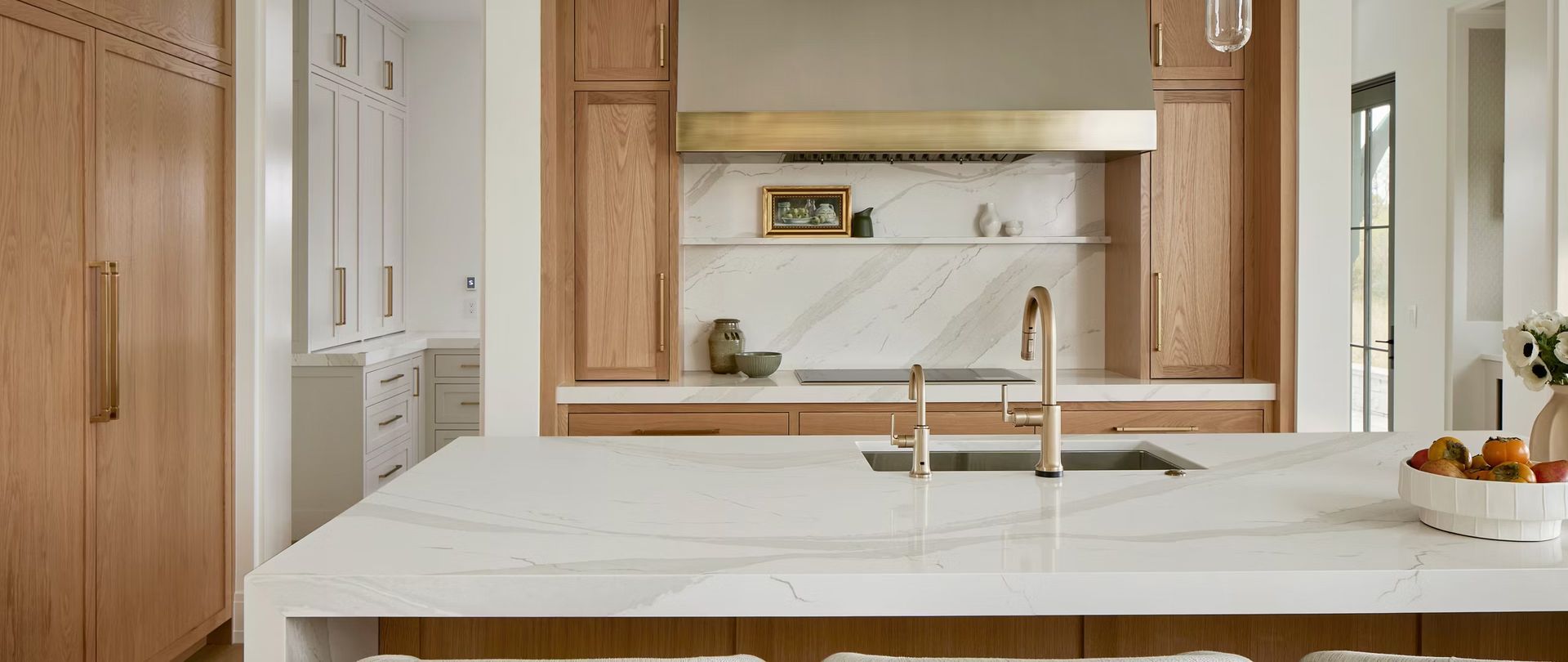
- Depending on the size and shape of your project, Cambria natural quartz countertops are not always seamless, but skilled fabricators and installers are trained to minimize the appearance of any seams.
- Smaller-scale quartz installations such as bathroom vanities and kitchen islands may be seamless due to the amount of coverage needed for these applications.
- The appearance of seams is minimized through a combination of strategic placement, pattern matching, expert installation, and custom color-matched adhesives.
Are quartz countertops seamless?
As you plan your kitchen renovation and explore everything from color palettes to countertop materials, you may find yourself wondering whether quartz countertops are seamless. This is a common misconception. Quartz countertops, particularly around perimeters, can often have a seam. This is because quartz slabs are typically available in standard, fixed dimensions, much like all other stone surfaces. For example, a standard Cambria quartz slab measures 122x55.5″ (47 square feet) and a jumbo size quartz slab measures 132x65.5″ (60 square feet). This may be more than enough to cover a kitchen island without a seam. But an average size kitchen can have a range of 50–100 square feet of total countertop space. That means you’ll likely need more than one slab to cover your countertops (and maybe more if you plan to clad your backsplash) and those slabs must be joined by a seam. Even in smaller spaces, the geometry and layout of your kitchen—like L-shapes, U-shape, or complex perimeter turns—often make seams a structural necessity. So while a fine line will exist at any seam with any stone, experienced installers use advanced techniques to make stone surface seams incredibly tight and inconspicuous.
Cambria’s guidelines state that finished quartz seams should not exceed 1/32 of an inch in width—roughly the thickness of a single credit card. To achieve this fit, many quartz fabricators use high-tech Computer Numerical Control (CNC) machinery to precisely cut quartz slabs. Unlike some wider, more textured seams you see with other stone surfaces in older kitchens, this technology ensures smoother cuts and minimizes microscopic chips along the seam. The result is tightly joined slabs with an ultra-narrow seam that can easily evade the eye.
Where are quartz surface seams placed?
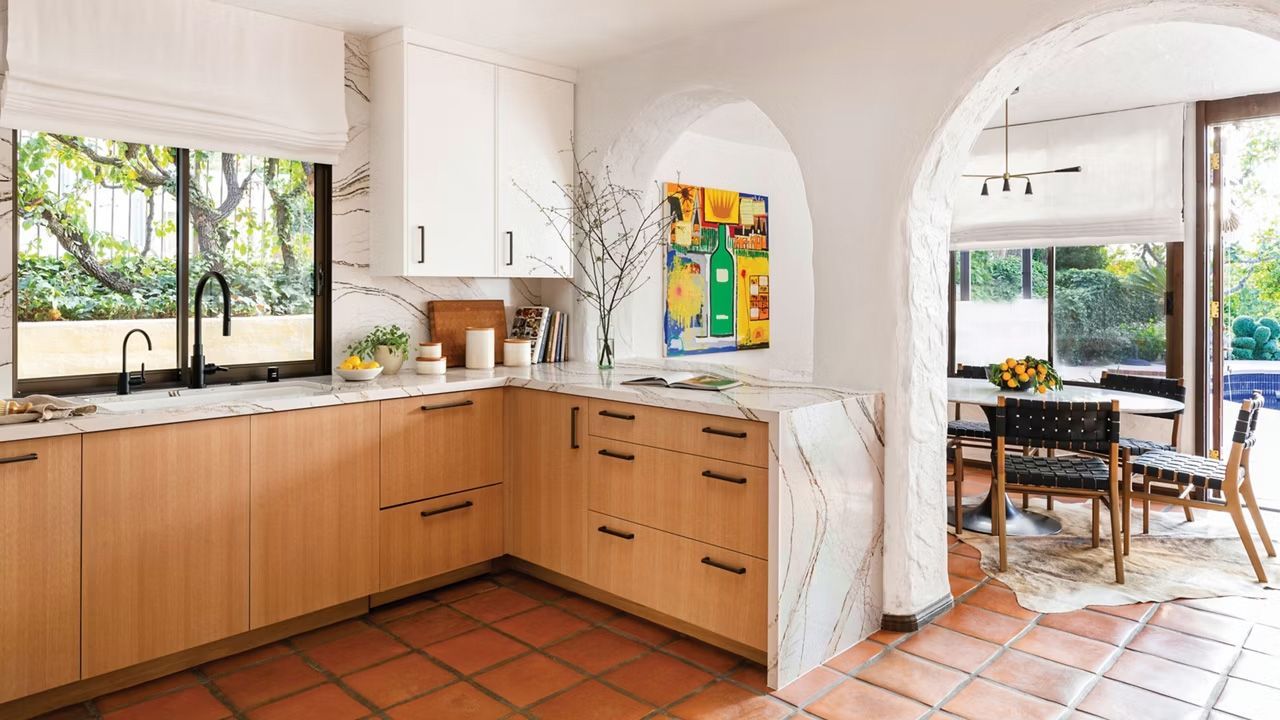
The quartz design you select plays a role in determining any seam placement in your space. Quartz designs that feature dramatic movement or prominent veining will require special consideration when planning larger layouts so that the vein movement crosses over a seam in a natural way.
According to Cambria’s Director of Customer Experience, Christopher Donaldson, homeowners can confuse a functional seam with the art of vein matching, thinking they “don’t want seams,” when what they really don’t want are seams where the slab design isn’t well matched across the seam. A skilled quartz surface installer should be able to coordinate your quartz slabs so the design patterning flows across any seam with continuity, to achieve that near-seamless illusion most homeowners are hoping for.
What are best practices for seam placement?
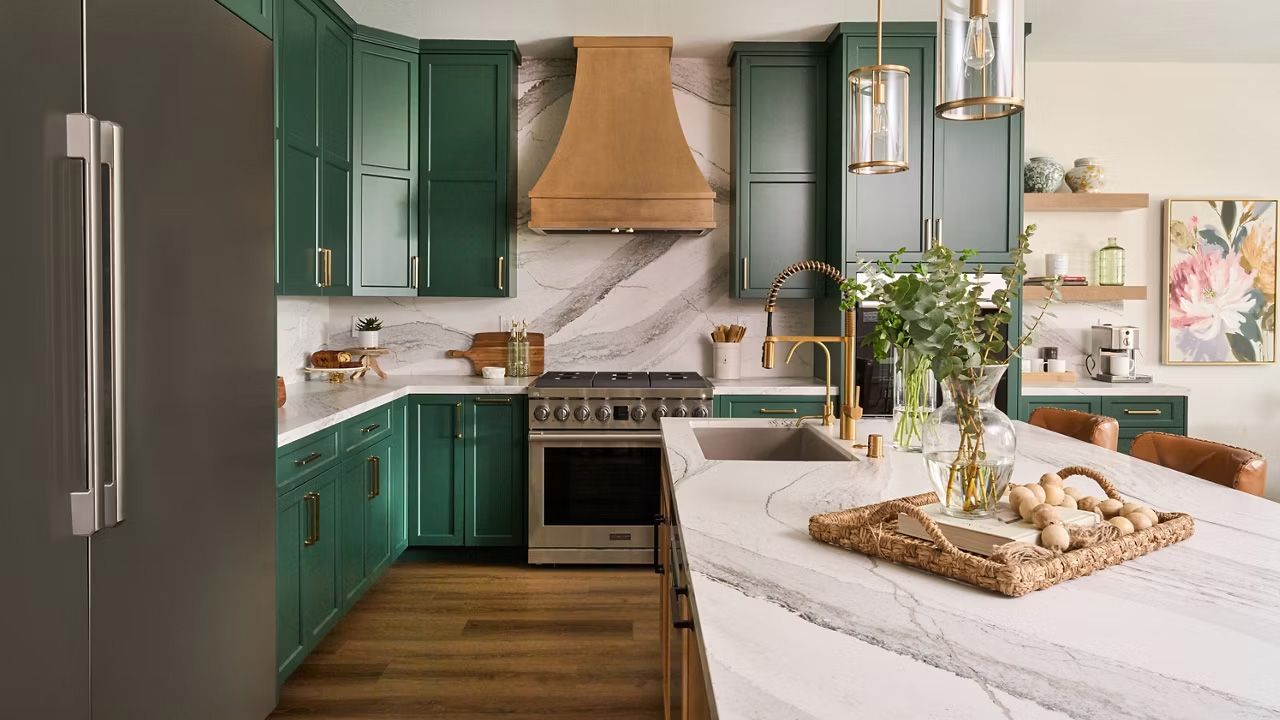
Good seam placement is part art and part science. A more complex or movement-rich quartz design can make the transition at a seam slightly more obvious than a design that has more subtle movement or simple flecks of color. So, to take the guesswork out of matching bold patterns across a seam, it’s important to request a digital layout preview from your fabricator/installer that shows how the aesthetics will coordinate between the fabricated pieces. These sophisticated 3D renderings allow you to visualize precisely how the veins of your favorite quartz designs will align before a single cut is ever made.
Do waterfall countertops have seams?
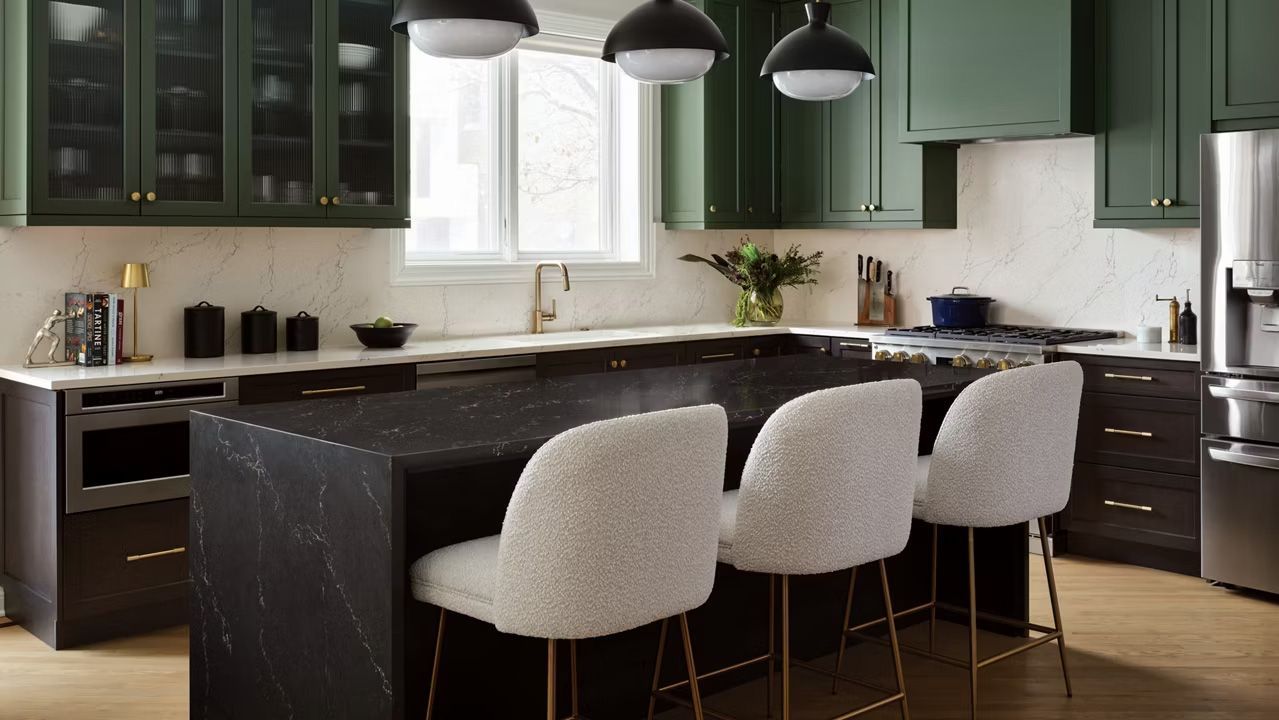
A seamless quartz island top is possible so long as it’s no larger than a single slab. And, if you’re dreaming of a waterfall edge, either on your kitchen island or at the end of a perimeter countertop, that is two pieces of quartz slab seamed together at the edge where the product goes over the side.
Again, depending on the size of your island or perimeter countertop, the vertical piece that goes down to the floor may need to be cut from a separate slab, causing the stone’s vein pattern to potentially shift at the edge. So, discussing these options with your designer and mapping the alignment of your slab design over the waterfall edge is essential for the best outcome.
Stop by our showroom to explore Cambria’s stunning quartz selection and discover the perfect surface for your next kitchen or bath remodel.