
Quartz vs. Concrete Countertops by Cambria
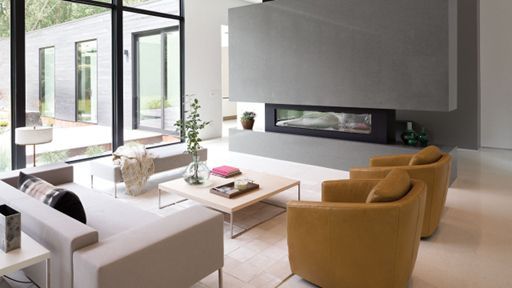
Quartz and concrete countertops both bring bold, modern aesthetics to a space. While concrete offers one-of-a-kind customization, quartz delivers that same contemporary look with added durability and less maintenance. Choosing the right surface depends on your design goals, usage priorities, and how much upkeep you’re comfortable with over time.
Quartz vs. Concrete
Curious about the similarities and differences of quartz and concrete countertops? Explore what sets them apart.
What Is Quartz?
Quartz countertops are made of abundant natural quartz crystals that are then combined with binders and pigments to create its final, beautiful product. This process results in maintenance-free surfaces that are extremely durable, nonabsorbent, and resistant to stains, scratches, and chips. Available in a wide range of designs, colors, and consistent patterns, quartz also presents a uniform look from slab to slab.
What Is Concrete?
Concrete countertops are custom-made surfaces formed from a mix of cement, sand, aggregates, and water. Poured into molds and sealed after curing, concrete is durable and heat resistant—though some sealers may be prone to heat damage. Its porous surface requires regular sealing to help prevent against stain, moisture, and damage. Known for its industrial aesthetic, concrete offers full customization for shape, finish, color, and texture—all affecting its final cost.
Performance: Quartz vs. Concrete
While both quartz and concrete surfaces create a contemporary look, they perform differently when it comes to durability, upkeep, and design consistency. Discover the differences between how the two perform.
Maintenance
Quartz countertops are maintenance free, stain resistant, naturally nonabsorbent, and NSF-51 opens in a new tab certified, and they never need sealing. To clean, just wipe with warm water, a soft cotton cloth, and mild soap, if desired. Concrete countertops are naturally porous and must be sealed to resist stains, moisture, and damage. Even sealed, they require ongoing care: spills should be wiped up immediately, pH-neutral cleaners must be used, and sealing often needs to be done annually.
Durability
Quartz countertops are highly durable, resisting chips, scratches, and stains. They handle daily use well, though a trivet should be used to protect from heat. Concrete is strong and long lasting but more prone to chipping, cracking, or scratching without proper reinforcement or care. Sealing helps protect its porous surface, with durability depending on mix, support, and maintenance. Cambria quartz surfaces are backed by a transferable Full Lifetime Warranty to provide peace of mind for life.
Appearance
Quartz countertops come in a wide range of colors, patterns, finishes, and thicknesses—including 1cm, 2cm, and 3cm options. Designs can reflect the look of natural stone or concrete while delivering consistency from slab to slab. Concrete has a natural, industrial look that can be fully customized. It can be molded into any shape, finished to various textures, and embedded with materials like glass or stone, and may develop a patina over time that adds character and variation.
Environmental Impact
Quartz is harvested by removing small aggregate quartz stones, which leaves a smaller footprint and generates less waste. This harvesting practice allows for more optimal native vegetation restoration. Concrete is made from widely available local materials, but its production is labor-intensive and requires additional energy for mixing, curing, and transport. Using recycled materials or low-carbon alternatives can help reduce its impact.
Available at Cabinet-S-Top, 1977 Medina Road, Medina, OH 44256 - 330.239.3630