
Quartz vs. Porcelain Countertops by Cambria
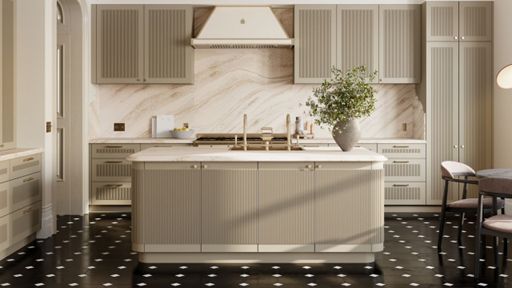
Quartz and porcelain countertops bring elegance to any space, offering an array of designs. While both are excellent choices, their performance and minimal maintenance set them apart. Understanding their similarities and differences will help you choose the best option for you.
Choosing between quartz and porcelain countertops? We’re here to help you find the right fit for your home.
What Is Quartz?
Quartz countertops are made of natural quartz crystals combined with binders and pigments to create the final product. This process enables quartz countertops to be extremely durable, nonabsorbent, and resistant to stains, scratches, and chips. Available in a wide range of designs, colors, and finishes, Cambria quartz surfaces also offer rich depth, texture, and versatile edge profiles for a truly luxurious look.
What Is Porcelain?
Porcelain countertops are crafted through a precise manufacturing process. Raw materials are ground into a fine powder, mixed with water, and shaped into durable, nonabsorbent slabs. Decorative patterns are applied to the top of the surface with inkjet technology to create the look of natural stone or other designs, but these designs do not run through the slab. While resistant to stains, scratches, and heat, porcelain may be prone to chips that cannot be repaired.
Performance: Quartz vs. Porcelain
Quartz and porcelain have their own beauty and distinct qualities, but they perform differently. See how they compare.
Maintenance
Quartz and porcelain countertops are effortless to maintain. Due to being nonabsorbent, both materials are stain resistant and never need sealing. Some options, including Cambria quartz and certain porcelain surfaces, are NSF-51 opens in a new tab certified for safe food preparation.
To clean either, just wipe with warm water, a soft cotton cloth, and mild soap, if desired.
Durability
Quartz and porcelain are both durable and scratch resistant. Porcelain tends to be a popular choice for outdoor spaces, though prolonged exposure may lead to fading over time. It is also more brittle and prone to chipping, especially along edges or during installation. Unlike porcelain, which is often impossible to fix, quartz chips can typically be repaired. Cambria surfaces also come with a transferable Full Lifetime Warranty, ensuring long-term durability and repair support, if ever needed.
Appearance
Quartz offers a wide range of colors and patterns, with depth and luxury running through the slab and edges. Some designs feature raised or debossed veining for enhanced dimension and texture. Porcelain’s surface-level inkjet designs can mimic natural stone but has limited edge profile options compared to the more intricate possibilities of quartz. While porcelain’s thin profile provides a sleek look, Cambria’s 1cm quartz surfaces offer additional benefits. They are lightweight, making installation a breeze; are incredibly versatile for unique applications like showers and fireplace surrounds; and can even be backlit for dramatic illumination. They’re also available in multiple finishes for greater design flexibility.
Environmental Impact
Quartz is harvested by removing small aggregate quartz stones, which leaves a smaller footprint and generates less waste. This harvesting practice allows for more optimal native vegetation restoration. Porcelain countertops offer durability and eco-friendly maintenance but may be less sustainable than quartz due to their energy-intensive production process.
Available at Cabinet-S-Top, 1977 Medina Road, Medina, OH 44256 - 330.239.3630